
Key takeaways
- Most small-business sites start with four pages: Home, what you offer, About and Contact.
- Add a page when a distinct group of visitors needs a distinct answer, for example a separate service people search for by name.
- Do not add pages to look bigger. Thin pages make a site harder to use and do not help it rank.
- A blog is a commitment, not a page. Start one only if you know who will write it and how often.
- Choose short, flat addresses now. Changing them later means redirects and lost history.
There is no correct number. A plumber in one town and a software company with twelve products need very different sites. But the question behind the question is usually “am I building too little or too much?”, and for most people starting out the answer is too much.
The four pages almost every site needs
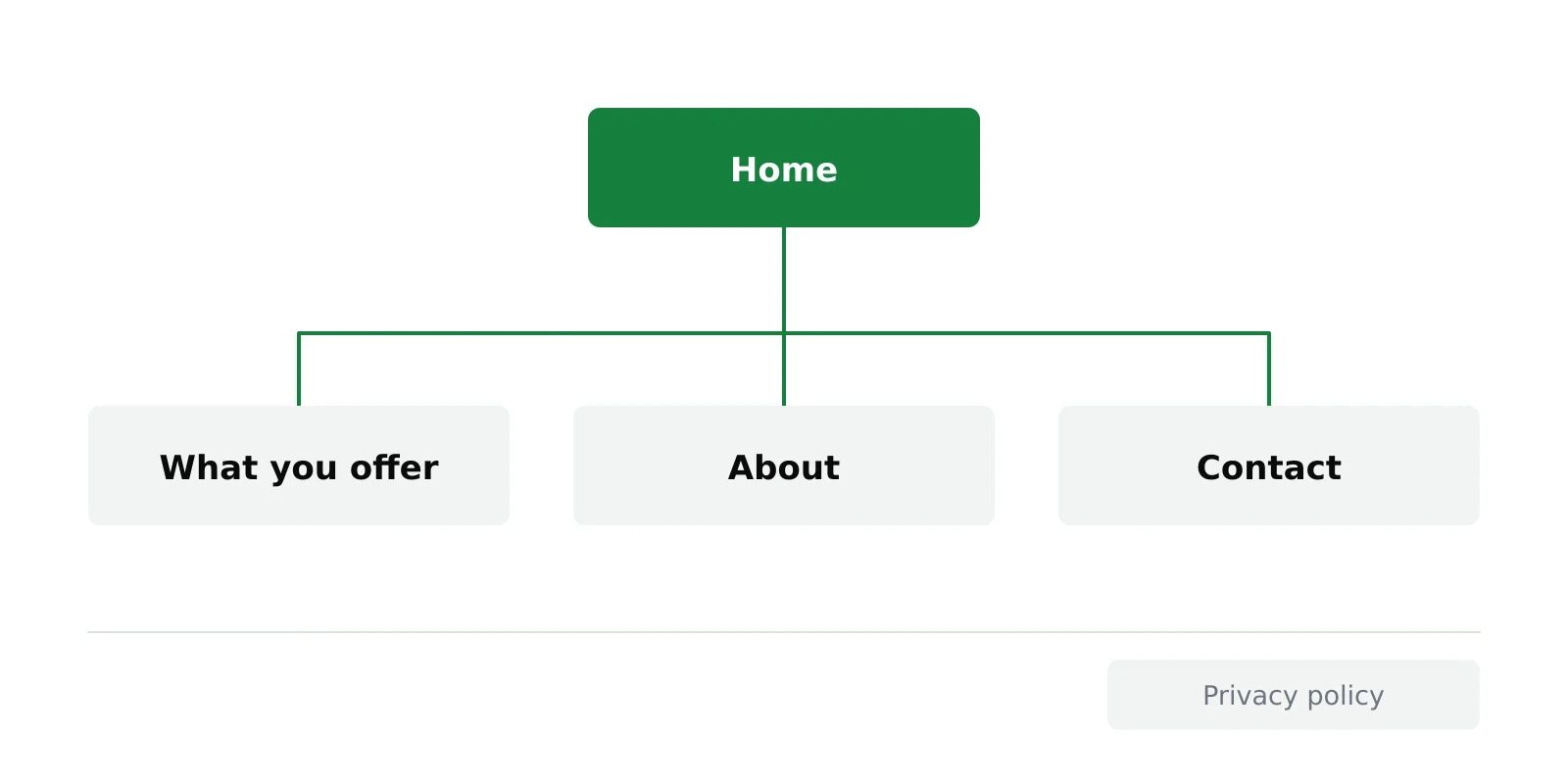
Home. What you do, who it is for and what to do next. See what should be on a homepage.
What you offer. One page describing your services or products, or one page for each if they are genuinely different. This is where the detail lives that the homepage only summarizes.
About. Who is behind the business and why a visitor should trust you. Short and specific beats long and general.
Contact. How to reach you, where you are if that matters and what happens after someone gets in touch.
That is a complete website. Plenty of successful small businesses never need more.
The legal pages
Most sites also need a privacy policy, and often terms of use or a cookie notice, depending on what the site collects and where your visitors are. They do not count as content pages, and they belong in the footer rather than the main menu. If you collect any personal data, even an email address through a form, in most places you need at least a privacy policy.
When to add more
Add a page when a distinct group of visitors arrives with a distinct question. Three common cases:
- Separate services. If people search for “kitchen remodeling” and “bathroom remodeling” separately, each deserves its own page. One page that lists both answers neither search well.
- Separate locations. If you serve several towns and the service differs in each, with different hours, staff or prices, a page per location is useful. If nothing differs except the name of the town, it is not.
- A real question that keeps coming up. If customers keep asking how your process works or what something costs, a page that answers it saves you time and reassures people before they call.
The test for every new page: would a real visitor be glad it exists? If the honest reason is “it might help us rank”, it probably will not, because a page written for search engines rather than readers is usually thin.
The blog decision
A blog is not one page. It is a promise to keep publishing.
Done well, it is the best way for a small site to be found for the questions its customers ask. Done badly, it is a page with three posts from two years ago, which tells visitors that the business may not be paying attention either.
Start a blog if you can say who will write it, roughly how often and about what. A useful starting rule is to pick a handful of topics your customers care about and write a solid main article for each, then shorter pieces around it. If you cannot commit to that, leave the blog out. You can add it later without changing anything else.
Set the addresses once
The structure you choose now becomes the set of addresses, or URLs, that search engines and other sites will point to. Changing them later is possible, with redirects, but every change takes work and carries some risk.
Three habits that make addresses last:
- Keep them short and flat.
/kitchen-remodeling/rather than/services/residential/kitchens/remodeling/. - Use words, not dates or numbers. An address with a year in it looks old the following year.
- Name the thing, not the campaign.
/pricing/will outlive/spring-offer/.
A plan that grows
A good structure leaves room to grow without starting again. Start with the four pages and the services that deserve their own. Add pages when real questions show up. If you start a blog, organize it around a few main topics so that each new article has an obvious home.
For the complete path from idea to launch, read how to build a website.
Where NoTiesBuilder fits
NoTiesBuilder is our product and is launching soon. It will build a set number of pages for each site. That limit will apply only to what NoTiesBuilder builds: once the site is deployed, it is a normal WordPress site and you can add as many pages as you like yourself, without paying anyone. You can join the waiting list.
Frequently asked questions
How many pages does a small-business website need?
Usually four to start: Home, what you offer, About and Contact, plus a privacy policy. Add service or location pages when they answer genuinely different questions.
Does having more pages help SEO?
More useful pages can help, because each one can answer a specific search. More pages for their own sake do not, and thin pages can make a site worse to use.
Should a one-page website be enough?
For one offer, a launch or a test, yes. See landing page vs website for when to move beyond it.
Do I need a blog?
Only if you will keep it going. A blog is one of the best ways for a small site to be found, and an abandoned one is worse than none.