
Key takeaways
- A landing page is one page with one job and one action. A website is several pages serving different visitors and different questions.
- Two questions decide it: do different visitors need different answers, and will you publish over time?
- If both answers are no, start with a landing page. Building more is often a way of delaying launch.
- Build the landing page on a platform that can grow into a full site, so upgrading is adding pages, not starting again.
- A landing page can still rank, but a site with several focused pages usually has more chances to be found.
The words get used loosely. Some people call any homepage a landing page; some call a single scrolling page a website. For deciding what to build, the useful distinction is about jobs.
What each one is
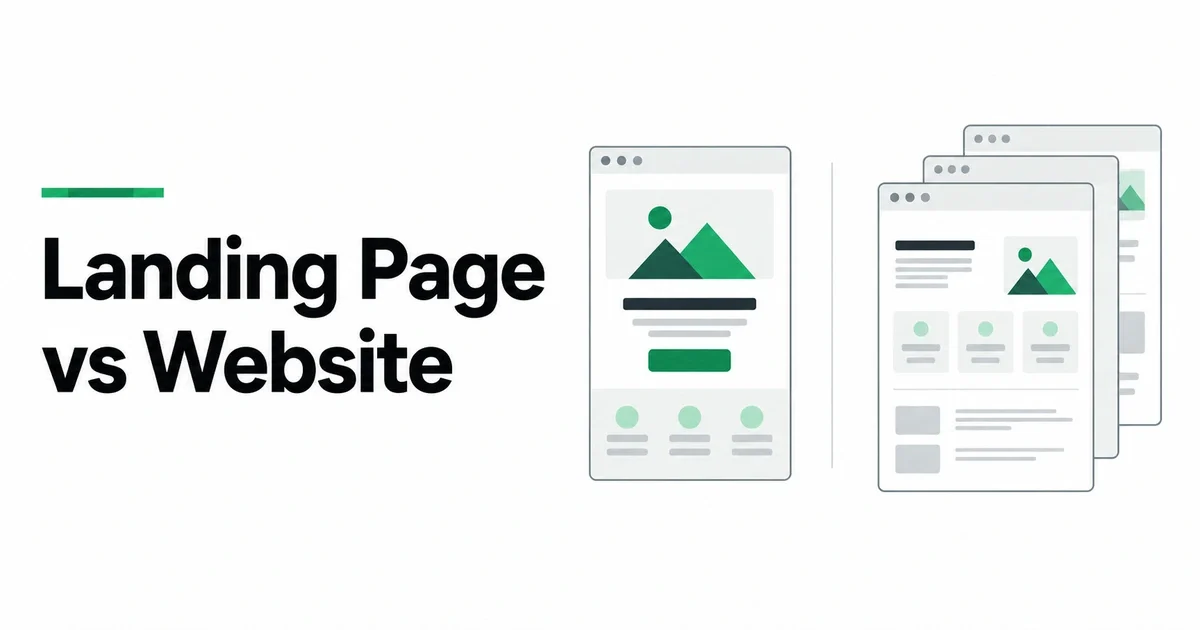
A landing page has one job. A visitor arrives, usually from a specific link, ad, post or email, reads one argument and takes one action: signs up, books, buys or asks for a quote. Everything on the page serves that action. There is often no main menu, because a menu is a way to leave.
A website has several jobs. Different visitors arrive wanting different things: one wants prices, another wants to know who you are, a third wants an answer to a specific question. Each gets a page. There is a menu because people need to move around.
Neither is better. They solve different problems.
The two-question test
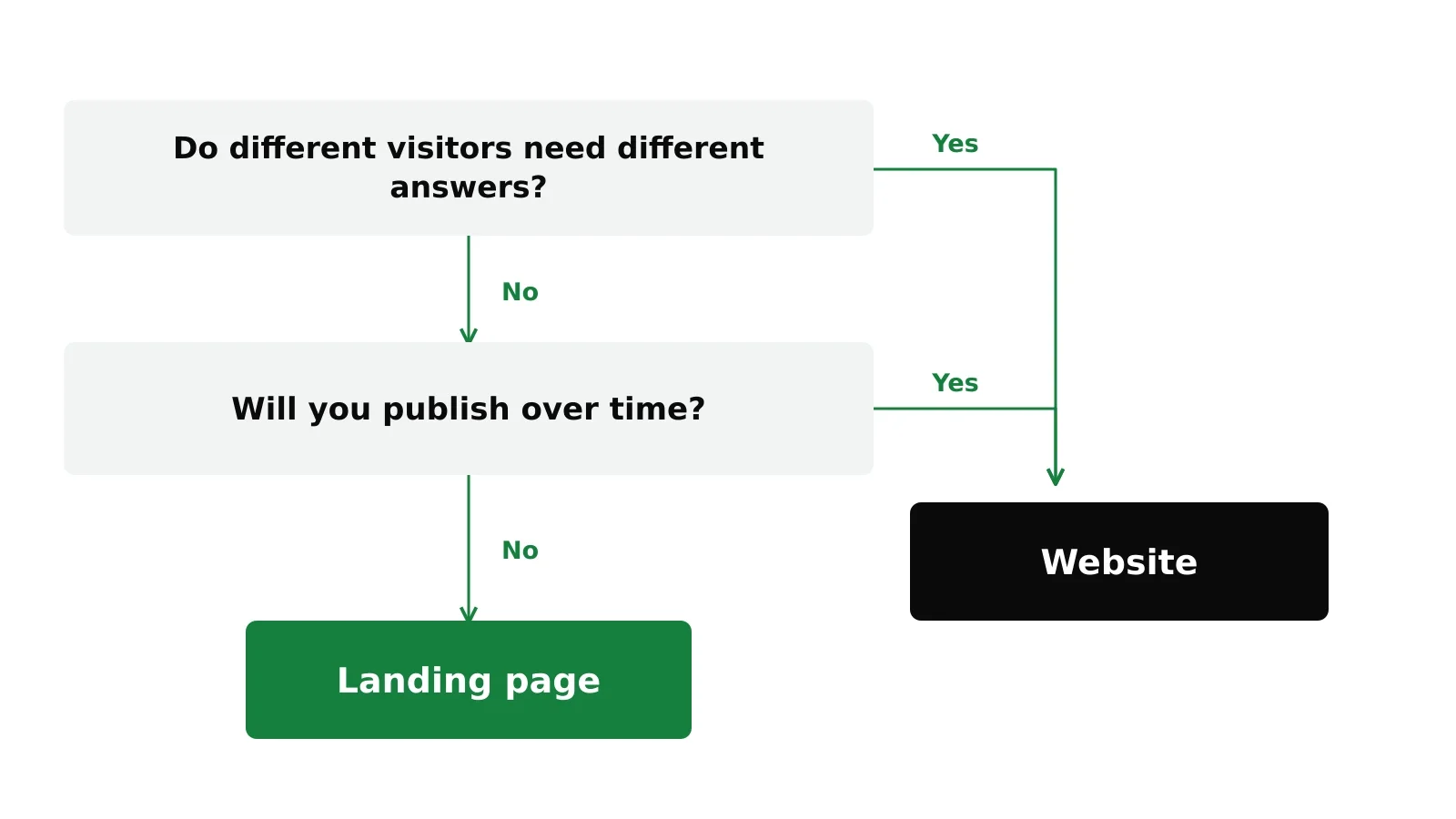
Answer two questions honestly.
1. Do different visitors need different answers?
If you sell one thing to one kind of customer, probably not. One clear page can say what it is, why it is good, what it costs and how to start.
If you offer several services, serve several kinds of customer or people regularly ask questions that need more than a paragraph, then yes. Squeezing all of that onto one page makes it worse for everyone.
2. Will you publish over time?
If you plan to write articles, guides or updates, you need a structure that can hold them: a blog, archives and pages that link to each other. A single page cannot.
If both answers are no, start with a landing page. If either is yes, you need a website, even a small one.
When a landing page is the right call
- Testing an idea. Before you build anything bigger, find out if anyone wants it.
- Launching one offer. A course, an event, a product, a waiting list.
- The end of a link. Something to point to from social media, a business card or an email signature.
- You have not decided yet. A clear page that is live beats a full site you are still planning.
The common mistake is building eight pages when one would do. Every extra page is more to write, more to maintain and more time before launch.
When you need a website
- Several services or products that people search for separately.
- Several audiences, for example customers and partners, or homeowners and contractors.
- Trust takes more than one page: case studies, credentials, a real About page.
- You want to be found for many questions, which usually means a blog organized by topic.
The opposite mistake is cramming a whole business onto one endless page, where nobody can find the part they came for.
Upgrading is not a trap, if you plan for it
Many people start with a landing page and later need a website. That is a normal path, and it should be easy. Whether it is depends on what you built the landing page with.
If the landing page lives on a platform that also runs full websites, such as WordPress, upgrading means adding pages, a menu and perhaps a blog to the same site. The address stays the same, so anything that pointed to your page keeps working.
If it lives on a single-page tool, upgrading can mean moving to a different platform, rebuilding the page and redirecting the old address. That is more work, and it is the kind of tie we describe in the website you’re renting.
So even if you only need one page today, it is worth building it somewhere that can hold twenty.
What about search?
A landing page can rank, especially for a specific name or offer. But search engines rank individual pages, and each page answers a limited set of searches. A site with several focused pages, each answering a specific question, has more chances to be found. If being found through search is part of the plan, that points toward a website. See how many pages should a website have for how to size it.
Where NoTiesBuilder fits
NoTiesBuilder is our product and is launching soon. It will build both a landing site and a full website with a blog structure, and both will be a normal WordPress site on your own hosting, so a landing can become a full site later by adding pages yourself, at no cost. You can join the waiting list.
Frequently asked questions
What is the difference between a landing page and a website?
A landing page has one purpose and one main action. A website has several pages that serve different visitors and questions, usually with a menu and often a blog.
Is a landing page enough for a small business?
For one offer and one kind of customer, often yes. When you add services, audiences or a blog, you need a website.
Can a landing page rank on Google?
Yes, particularly for specific names and offers. A site with several focused pages usually has more chances to be found for different searches.
Can I turn a landing page into a website later?
Yes, easily if it is built on a platform that runs full sites, such as WordPress. On a single-page tool you may need to rebuild elsewhere.